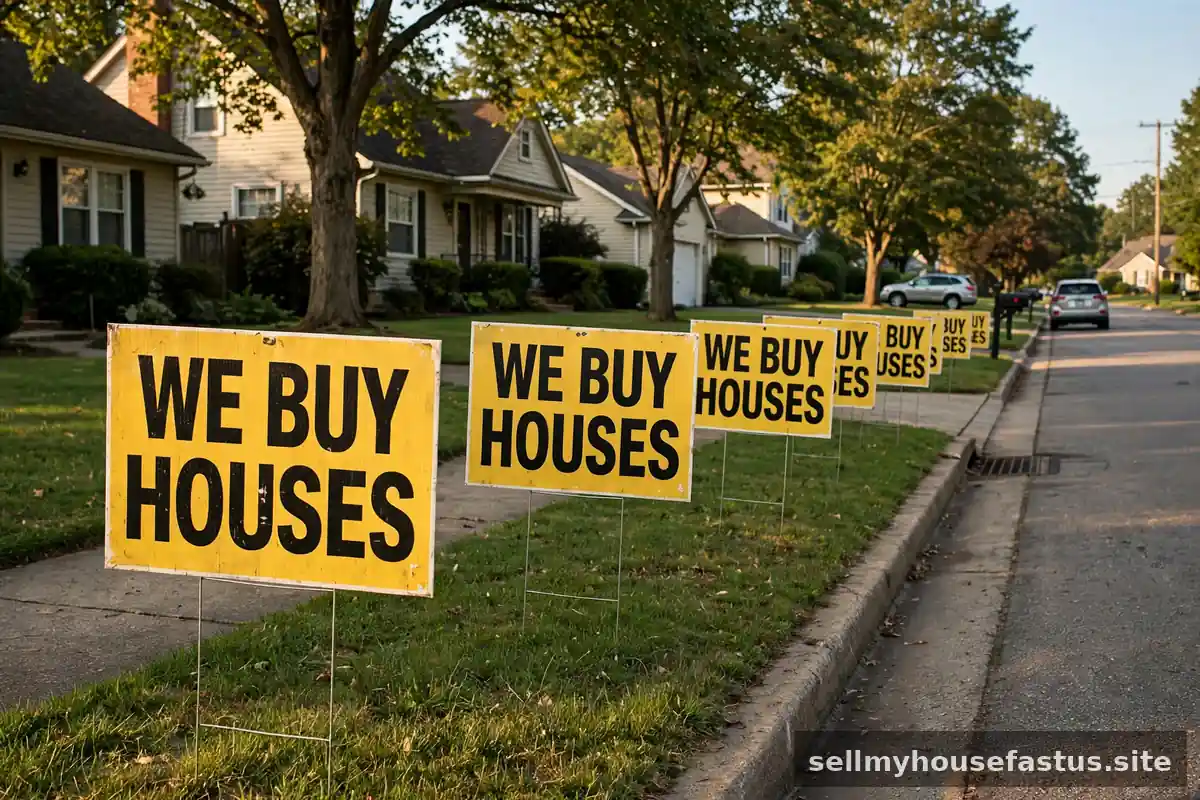
Type “sell my house fast” into a search engine and you’ll drown in companies promising cash offers — local investors, national franchises with familiar jingles, slick websites offering “instant” valuations. They are not interchangeable. Some are excellent; some are wholesalers who’ll never actually buy your house; a few are outright scams.
This guide maps the landscape of companies that buy houses for cash, shows you how to tell them apart, and gives you a vetting checklist so the company you pick is one you can trust with the largest transaction of your life.
The Four Types of Cash-Buying Companies
1. Local independent investors
Individuals or small companies buying in one metro area. They know the neighborhoods block by block, often pay fairly because their overhead is low, and their reputation is local — which keeps them honest. The trade-off: one buyer means one offer, so you need to contact several. Find them through local real-estate investor associations, referrals from agents or attorneys, and yes, even those yard signs — then vet them like any contractor.
2. National franchise networks
Big brands with local franchisees — the “We Buy Houses” signs you’ve seen for years belong to this category. The brand gives you a baseline of legitimacy and a corporate office to complain to, but each franchisee is an independent business. Quality varies office to office. Judge the local operator, not the logo on the website.
3. Online instant-offer platforms (iBuyers)
Tech companies making algorithm-driven offers — a different model from investor buyers, with near-market offers offset by service fees. They’re only in select markets and only want certain houses. See our iBuyer vs. cash buyer comparison for the full breakdown.
4. Wholesalers (the ones to watch)
Wholesalers don’t buy houses — they put them under contract and assign the contract to a real buyer for a fee. Many are upfront about this; the problematic ones aren’t. A wholesaler’s “offer” is only as real as the end buyer they haven’t found yet. There’s nothing illegal about wholesaling where it’s permitted, but you deserve to know who you’re actually dealing with before you sign.
The Vetting Checklist: 10 Questions Before You Sign
Run every company through this list. Legitimate buyers answer easily; bad actors deflect.
- Are you the buyer, or will you assign this contract? Get it in writing. If they hedge, assume wholesaler.
- Can I see proof of funds? A bank statement, line-of-credit letter, or similar — current, in the company’s name.
- How many houses have you bought in this area in the last year? Then verify: ask for addresses and check county records.
- What are all the fees and who pays closing costs? Everything in writing. Upfront fees of any kind are a walk-away signal.
- Can the offer change after inspection, and on what terms? Understand the renegotiation rules before you’re emotionally committed.
- What’s your typical closing timeline — and what’s the longest it’s taken? The second answer is more informative than the first.
- Can I speak to two recent sellers you’ve bought from? References are standard in every other high-trust transaction; this one is no different.
- What happens to my earnest deposit if you don’t close? There should be a clear answer with a real number attached.
- Will you provide the contract in advance for review? Any resistance here is disqualifying. Have an attorney or title company review it.
- Are you licensed, and where are you registered to do business? Requirements vary by state, but opacity about identity is never a good sign.

How to Compare Offers Apples-to-Apples
Three offers on the table? Don’t compare the headline numbers — compare net proceeds on closing day. Build a simple table:
| Buyer A | Buyer B | Buyer C | |
|---|---|---|---|
| Offer price | |||
| Minus: service fees | |||
| Minus: your closing costs | |||
| Minus: repair credits/deductions | |||
| = Net to you | |||
| Closing timeline | |||
| Proof of funds verified? |
The highest offer with the most deductions often loses to a lower, cleaner offer. And remember the context from how much cash buyers pay — an offer only means something relative to your home’s market value and what a traditional sale would net.
Red Flags That Mean “Walk Away”
- Upfront fees — “application,” “processing,” “due diligence” fees you pay before closing. Never legitimate.
- Pressure to sign immediately — exploding offers, “my partner won’t approve this tomorrow,” discouraging attorney review.
- Contracts you can’t take home — or blank spaces “we’ll fill in later.”
- Option periods with tiny deposits — a $100 option fee for a 30-day “inspection period” is a free lottery ticket on your house, not a purchase.
- No verifiable track record — no closed deals in county records, no reviews, no physical presence, website created last month.
- Guarantees that sound too good — “highest price, guaranteed,” “we pay full market value in cash.” The business model doesn’t work that way.
Understanding the Contract Before You Sign
Investor purchase agreements differ from standard realtor contracts in ways that matter. Beyond the price, scrutinize these clauses:
- Inspection/due-diligence period. How many days can the buyer investigate and walk away? Long periods (21–30+ days) with small deposits favor the buyer heavily — they can tie up your house while they decide. Push for 7–14 days.
- Assignment rights. Can the buyer transfer the contract to someone else? If yes, you’re dealing with a potential wholesaler regardless of what the website says.
- Earnest money. The deposit should be meaningful — 1% or more signals commitment. A $500 deposit on a $250,000 purchase is a red flag.
- “As-is” with right to inspect. Understand exactly what “as-is” covers: you’re not making repairs, but the buyer may still inspect and renegotiate or cancel. Know the rules of that game before you play.
- Closing date and extensions. Is the date firm? Who can extend it, and what does the other party get if they do?
- Title and survey objections. What happens if the title search finds a lien? Who pays to clear it?
You don’t need to become a contract lawyer — but you do need a lawyer, or at minimum a title company, to review the agreement before you sign. The hour it costs is the cheapest insurance in the transaction.
Where to Find Reputable Buyers
Start with referrals: ask a real estate agent (even if you’re not listing — many know investor buyers), a real estate attorney, or a title company who closes investor deals regularly. Local investor associations and REIA meetups are full of active buyers with reputations to protect. County records let you verify anyone’s claim about past purchases — search the buyer’s name or LLC and see what they actually closed.
Online, look past the ads to reviews with substance (detailed seller stories, not five-star one-liners), BBB complaint histories and resolutions, and how long the company has operated under the same name. A company that’s been buying in your county for a decade has more to lose from mistreating you than a fly-by-night operation does.

What the Process Looks Like With a Good Company
So you know what “normal” looks like: initial contact and basic property info; a walkthrough or video tour within a few days; a written offer, usually within 24–72 hours of the walkthrough; a purchase agreement with clear terms; title search and any inspections; then closing at a title company or attorney’s office, where you sign, the mortgage (if any) is paid off, and you receive your proceeds — often by wire the same day. Total elapsed time: typically one to three weeks. If a company can’t describe this process clearly, that’s information.
Before you commit to any fast-sale path, it’s worth understanding the full pros and cons of cash home buyers — the company you choose matters, but the model itself has trade-offs you should go in with eyes open about.
Frequently Asked Questions
Which cash home buyer is the fastest?
Speed depends more on the individual operator than the brand — a responsive local investor with an in-house title relationship can close in a week; a bureaucratic national office can take a month. Ask each buyer for their average and longest recent closing time.
Can I trust online reviews of cash buyers?
Partially. Look for detailed, specific reviews mentioning timelines and dollar experiences, and check complaint resolutions — how a company handles problems tells you more than a perfect rating. Cross-check claimed purchases in county records.
Are franchise “we buy houses” companies better than independents?
Not inherently. The franchise brand is marketing; the local franchisee is the business. Some are excellent, some aren’t. Vet the operator with the same checklist you’d use for an independent.
Should I have a lawyer review the contract?
Yes — especially for as-is investor contracts, which are often written to favor the buyer (long inspection periods, broad assignment rights, minimal deposits). A one-hour attorney review is cheap insurance on a six-figure transaction.
Should I tell each company I’m talking to others?
Yes. Transparency about competition is your best negotiating tool, and legitimate buyers expect it. “I’m comparing three offers this week” is professional, normal, and effective — it signals you’re serious and informed, which is exactly the seller that gets the best price.
The Bottom Line
The cash-buyer industry contains honest operators who provide a genuinely valuable service — and predators who exploit urgency. The difference between a good outcome and a bad one is rarely luck; it’s vetting. Proof of funds, verifiable closings, everything in writing, multiple competing offers. Do that work upfront and the company you choose will take care of the rest. And if anything in the process feels wrong — the pressure, the paperwork, the promises — pause and get independent advice before you sign. Your house, your timeline, your rules.