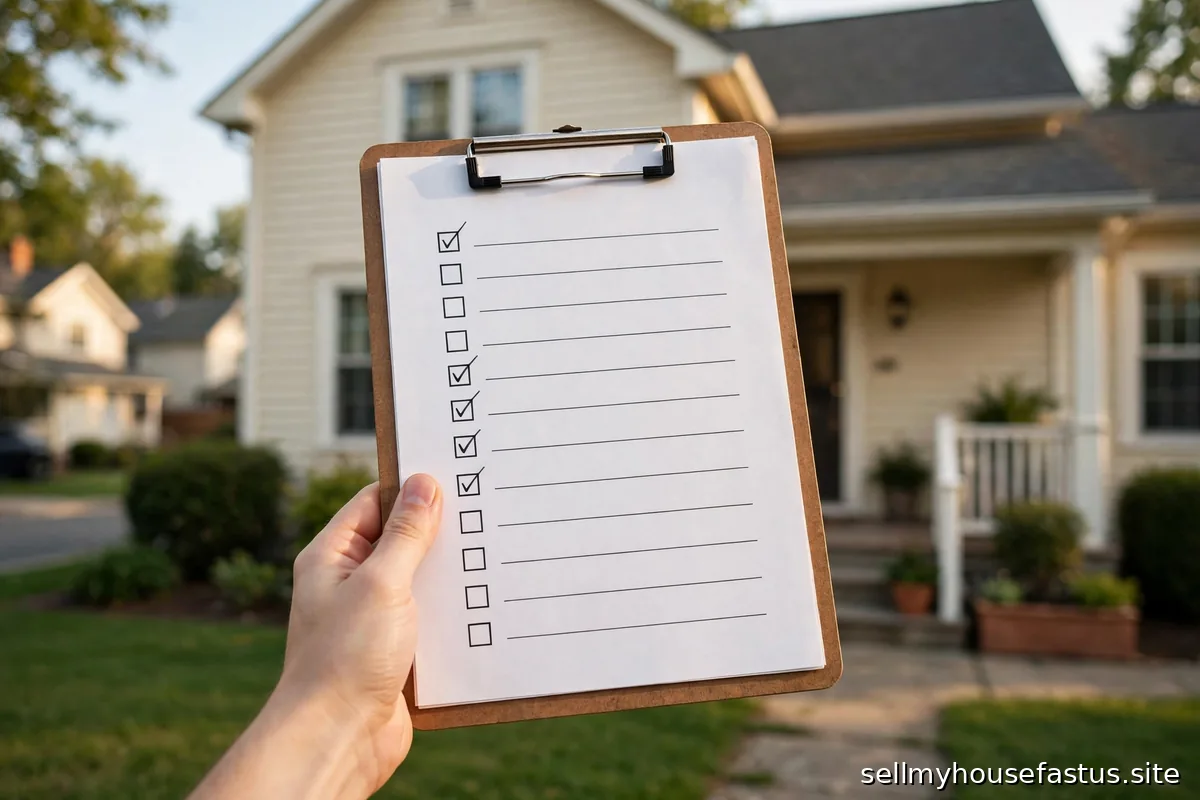
Selling fast doesn’t mean selling sloppy. The right prep — done in days, not weeks — can add thousands to your sale price whether you’re listing traditionally, selling to a cash buyer, or heading to auction. The wrong prep wastes money on upgrades you’ll never recoup and delays your timeline for zero benefit.
This is the fast-sale prep checklist: what to do in the first 48 hours, the one-week plan, room-by-room priorities, what not to fix, and how prep differs by selling method. Everything here is ranked by return on effort — because when you’re selling fast, effort is the scarce resource.
The First 48 Hours: Maximum Impact, Minimum Cost
- Declutter ruthlessly. Remove 30–50% of visible stuff: counters, shelves, closets, garage. Buyers can’t see the house through your belongings, and clutter makes rooms feel smaller. Box it, store it, donate it — just get it out of sight. Cost: nearly free. Impact: enormous.
- Deep clean everything. Not “tidy” — deep clean: baseboards, windows, grout, appliances inside and out, ceiling fans, light fixtures. A spotless house signals a maintained house. DIY in a weekend or hire a crew for a few hundred dollars.
- Fix the obvious broken things. Dripping faucets, running toilets, cracked switch plates, burned-out bulbs, sticky doors, broken blinds. Each one is a tiny signal that whispers “deferred maintenance” — and buyers extrapolate from tiny signals to big fears.
- Mow, trim, and tidy the exterior. Curb appeal is the first impression and the listing photo. Mow the lawn, trim bushes away from the house, sweep the walkway, and put a clean doormat down. An hour of yard work photographs like a thousand dollars.
- Light it up. Replace dim bulbs with bright daylight LEDs, open all blinds, clean the windows. Bright houses photograph better, show better, and feel bigger. This is the cheapest transformation in real estate.
The One-Week Plan: High-ROI Improvements
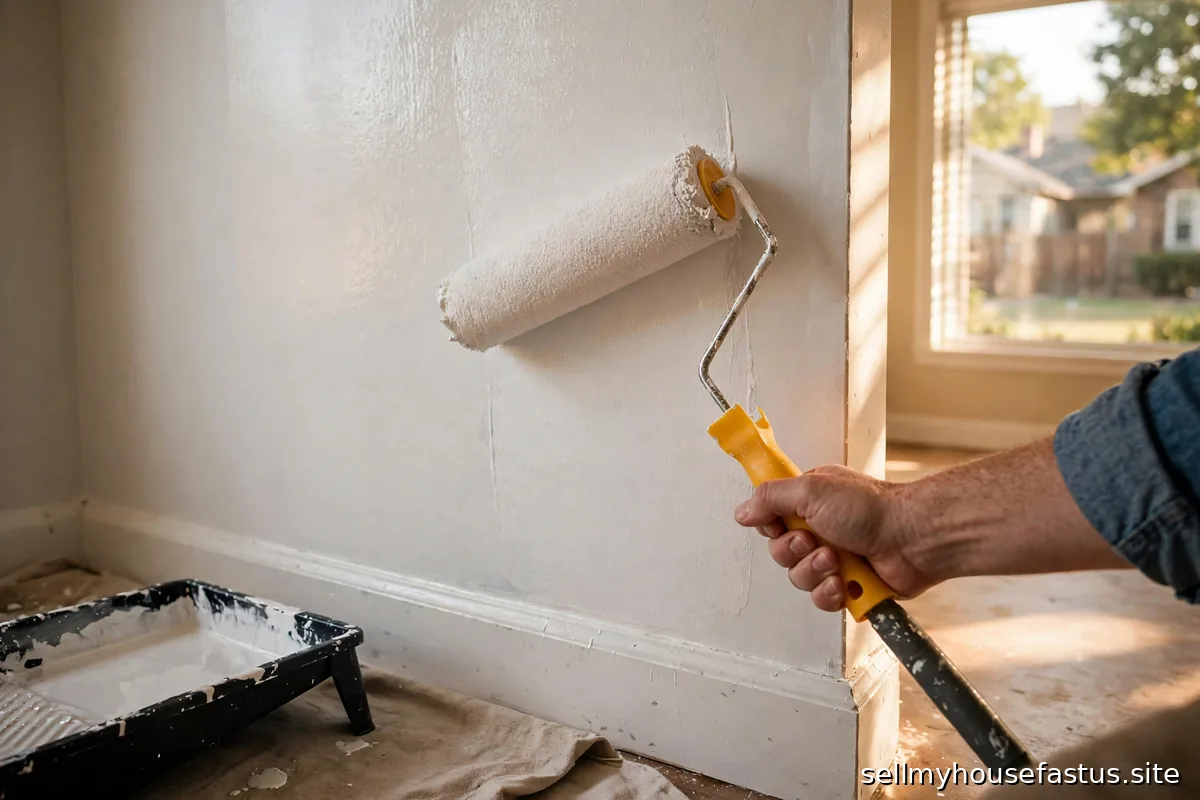
- Paint the worst offenders. You don’t need to repaint the house — just the rooms that are scuffed, dark, or aggressively personalized. One gallon of neutral paint on the worst wall in each main room. Fresh paint has the highest ROI of any improvement, and it’s a weekend job.
- Update the entry. New doormat, clean or painted front door, polished hardware, working doorbell. Buyers decide how they feel about a house in the first 30 seconds — most of that is the entry.
- Refresh caulk and grout. Bathrooms and kitchens live or die on cleanliness signals. Re-caulk tubs, scrub or re-grout tile, replace a stained toilet seat. A $50 bathroom refresh reads as a $5,000 renovation to the casual eye.
- Fix flooring’s worst spots. Not new floors — just the worst spots: stretched carpet in the traffic lane, the cracked tile by the door, the scratched patch. Area rugs cover a multitude of sins strategically placed.
- Neutralize smells. Pet odors, cooking smells, mustiness — you can’t smell your own house, so ask a brutally honest friend. Enzyme cleaners for pets, baking soda for carpets, and ventilation. Smell kills deals faster than ugly paint.
Room-by-Room Priorities
Kitchen: clear counters to nearly empty, clean appliances inside and out, update cabinet hardware if dated (cheap, fast, transformative), make sure every light works. Bathrooms: spotless, fresh towels, new shower curtain, empty the counters, fix any drip. Bedrooms: decluttered, neutral bedding, closets half-empty (storage sells). Living areas: less furniture reads as more space — remove a piece or two if rooms feel tight. Garage/basement: organized, swept, not packed to the ceiling — buyers read cluttered storage as “not enough storage.”
Prep for Photos (They Matter More Than Showings Now)
Most buyers decide whether to visit based on photos alone — your prep should be photo-driven. Shoot (or have shot) on a bright day, all lights on, blinds open, beds made hotel-tight, toilet lids down, cars out of the driveway, trash cans hidden, pets and pet gear out of frame. The photo session is the performance; the rest is rehearsal. If you’re selling to a cash buyer as-is, photos matter less — but they still affect the offer, so don’t skip the basics.
What NOT to Fix: The No-ROI List
- Full kitchen/bathroom remodels. You’ll recoup a fraction and lose weeks. Clean and declutter instead.
- Roof replacement (unless it’s actively leaking or killing the sale — then get three quotes, fast).
- New windows, HVAC, or other systems — price the house for its condition instead.
- Swimming pool additions or landscaping overhauls. Never for a fast sale.
- Highly personal taste: bold accent walls are fine if they’re the only bold thing; a house full of them needs neutralizing, but one statement wall can stay.
- Anything requiring permits and inspections on a fast timeline — the bureaucracy alone kills your schedule.
The rule: if it doesn’t photograph, smell, or function better after the fix, skip it. Fast-sale prep is about perception and function, not renovation.
Prep Differs by Selling Method
- Traditional listing: do everything above — you’re competing for retail buyers’ emotions and dollars.
- Cash buyer / investor: do the 48-hour basics (clean, declutter, lights, yard) and skip the rest. Investors buy on numbers, but a clean house still gets better numbers — it signals fewer hidden problems.
- iBuyer: similar to cash buyers, but their algorithmic pricing penalizes visible condition issues — the cosmetic basics genuinely move their offer.
- Auction: curb appeal and photography matter disproportionately (bidders decide from listings), but don’t over-invest — auction buyers expect as-is and price accordingly.
Prep and Pricing Work Together
Prep doesn’t replace pricing — it supports it. A well-prepped house at the right price sells fast; a well-prepped house priced 10% high still sits. Set your price from comparable sales first (see pricing your home for a fast sale), then prep to make the house deserve that price in photos and showings. Under-prepped and overpriced is the slowest combination in real estate.

The $100 Prep Kit: What to Buy
One hardware-store trip covers most fast-sale prep. The list: a gallon or two of neutral interior paint plus a roller kit and angled brush; a tube of white caulk and a caulking gun; wood filler and a putty knife for nail holes and dings; bright daylight LED bulbs for every dim fixture; a new doormat; cabinet hardware if yours is dated (measure first — one standard size for the whole kitchen keeps it cheap); a toilet seat if any look stained; microfiber cloths, grout brush, and a good all-purpose cleaner; and enzyme pet-odor cleaner if applicable. Total: roughly $100–150. Everything on this list either photographs, smells, or functions better afterward — which is exactly the filter.
Prep When the House Is Vacant (or You’re Already Moved Out)
Vacant houses sell differently: empty rooms feel smaller and colder in photos, every flaw is magnified with no furniture to soften it, and vacancy itself raises buyer questions (how long? why? what’s wrong?). If you’re selling vacant on a fast timeline, the priorities shift: keep utilities on (a dark house with no running water for inspections is a deal-killer); maintain the yard and exterior on schedule — an overgrown lawn on a vacant house screams distress and invites lowballs; consider minimal staging — even just a bed, a couch, and a dining set in the main rooms transforms photos (some stagers offer single-room packages for exactly this); install timers on lights so evening drive-bys look lived-in; and tell your insurer the house is vacant, since standard policies often limit coverage after 30–60 days unoccupied.
The alternative for vacant houses in rough shape: skip prep entirely and sell as-is to a cash buyer. Vacant + as-is + investor buyer is a coherent strategy — the mistake is the middle path, where you half-prep a vacant house and get neither the retail premium nor the fast-sale speed.
The Printable Timeline
- Day 1: declutter blitz (every room, 30–50% out), start deep clean.
- Day 2: finish deep clean, fix minor repairs, yard work, lighting.
- Day 3: paint touch-ups, caulk/grout refresh, entry update, smell check with honest friend.
- Day 4: final staging (hotel beds, empty counters), photo shoot.
- Day 5: list — or start collecting cash offers with photos in hand.
Five days from lived-in to market-ready. It’s intense, but it’s finite — and every day of prep that moves your price 1% pays for itself many times over.
Frequently Asked Questions
How much should I spend prepping for a fast sale?
For most houses: a few hundred dollars (paint, cleaning supplies, minor hardware) plus sweat equity. The 48-hour basics cost almost nothing and deliver most of the value. Save four-figure spending for problems that would kill financing or offers — active leaks, broken HVAC in extreme weather, safety issues.
Do I need professional staging?
For a fast sale, usually not — professional staging takes time to schedule and pays off most in slow luxury markets. Your DIY version (declutter, clean, neutral, bright) captures most of the benefit at zero cost. Exception: vacant high-end homes, where staging genuinely moves the needle.
Should I get a pre-listing inspection?
It can speed things up by surfacing issues before the buyer’s inspector does — letting you fix cheaply or price accordingly. But on a truly fast timeline, skip it and price for condition instead; the inspection contingency is the buyer’s problem to manage, and many fast-sale buyers waive it anyway.
The Bottom Line
Fast-sale prep is a five-day sprint, not a renovation: declutter, deep clean, fix the obvious, paint the worst, light everything, and photograph it well. Skip anything that doesn’t photograph, smell, or function better. Pair honest prep with honest pricing, and your house won’t just sell fast — it’ll sell fast for the right price.